Loyalty has the power to drive sales when fueled by relevant, accurate communication
Overview
Loyalty in the digital era is neither automatic nor unconditional. This research shows that consumers actively choose the brands they remain loyal to, while loyalty does not exist in isolation; consumers expect brands to reciprocate their interest through relevant communication, meaningful offers, and consistent presence. Loyalty emerges as a two-way relationship sustained by both consumer intent and brand responsibility.
The findings also clarify the commercial impact of loyalty. Familiar brands benefit from reduced friction, higher confidence, and faster conversion, positioning loyalty as a direct driver of sales rather than a soft engagement indicator. When trust and familiarity are established, purchase decisions become simpler and more resilient.
Discovery remains a defining feature of digital behavior, but curiosity rarely translates into immediate purchasing. Conversion depends on multiple factors such as price, experience and relevance, delivered consistently over time through well-orchestrated, personalized, and timely communication.
Communication volume is not a substitute for relevance. Excessive messaging actively undermines trust, while fewer, more targeted interactions accelerate loyalty.
Methodology
Optimove surveyed 1,034 customers in November-December 2025, ages 18–65, with household incomes of $75k+
1 . Loyalty Is a Two-Way Relationship
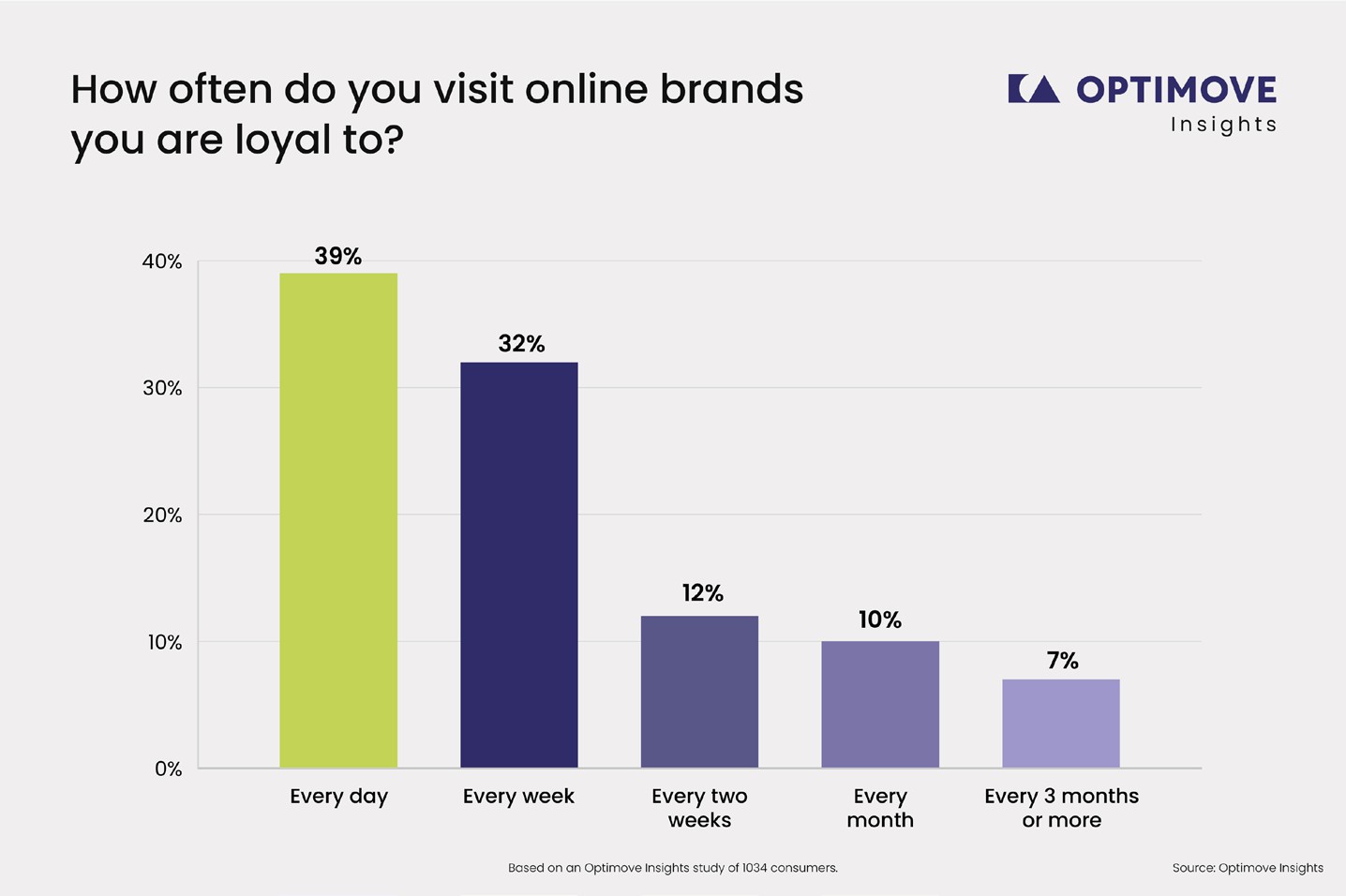
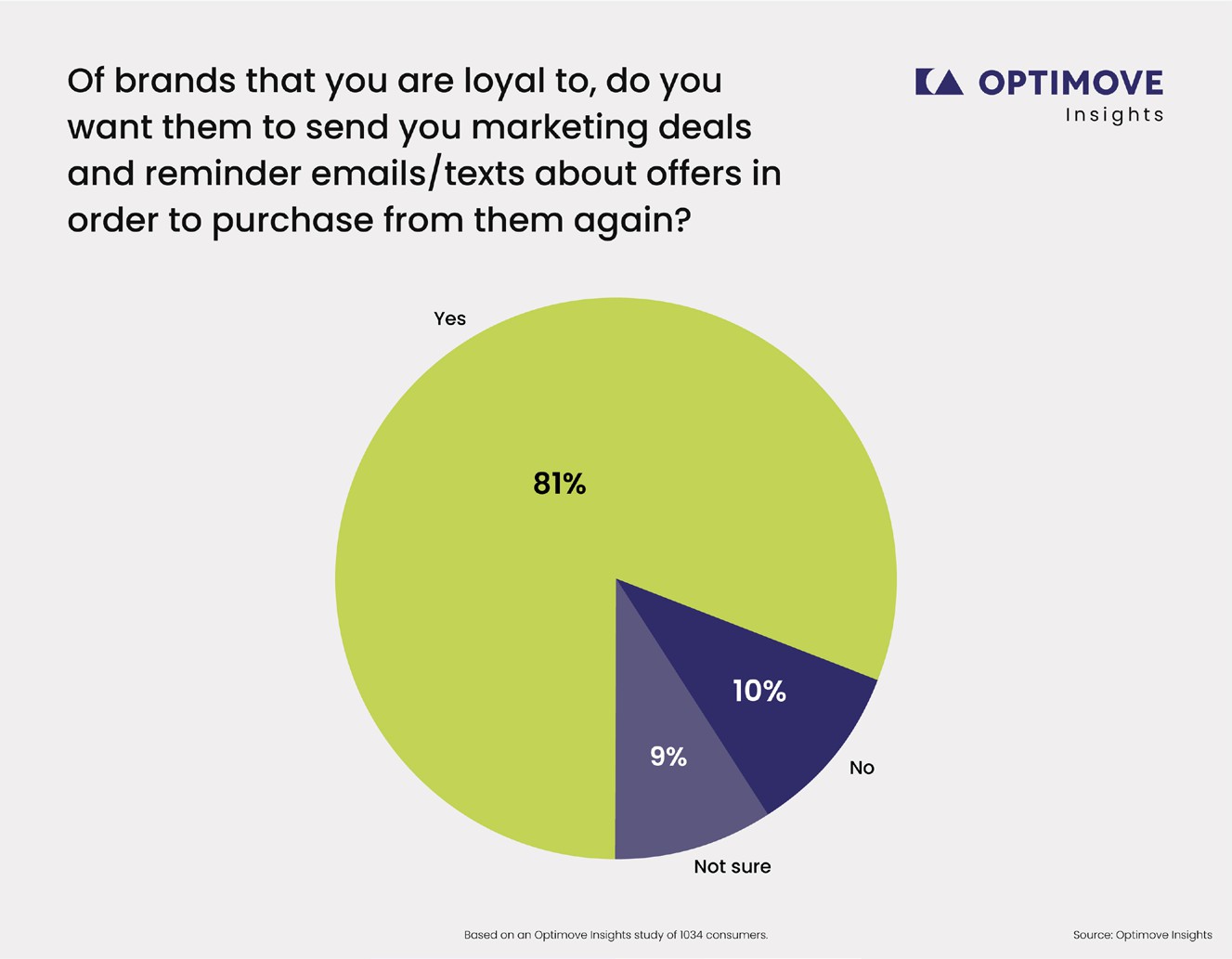
Findings: Loyal consumers demonstrate strong, self-initiated engagement, with 71% visiting brands they are loyal to every day or weekly. At the same time, 81% want those brands to actively send relevant deals and reminders, signaling that loyalty is reinforced through ongoing communication.
Interpretation:
Loyalty is not a static state, but an active relationship maintained both from the consumers’ side and the brand’s side. Frequent, spontaneous visits indicate that loyal customers are proactive, driven by accumulated value across experience, pricing, product relevance, and trust. This behavior reflects genuine autonomy rather than a simple reaction to the brand’s pushes.
On the other hand, consumers explicitly expect brands they trust to remain present through helpful, timely communication. The desire for reminders and offers suggests that loyalty thrives when brands consistently reinforce relevance, not when they assume affinity will persist on its own.
Implementation Approach:
Brands must treat loyalty as a two-way system that balances consumer-driven engagement with brand-led reinforcement. This requires aligning shopping experience, value, and product relevance with a communication strategy that delivers accurate, consistent, and timely messages. When brands actively support the relationship without overwhelming it, loyalty becomes durable, intentional, and self-sustaining.
2 . Loyalty Drives Sales
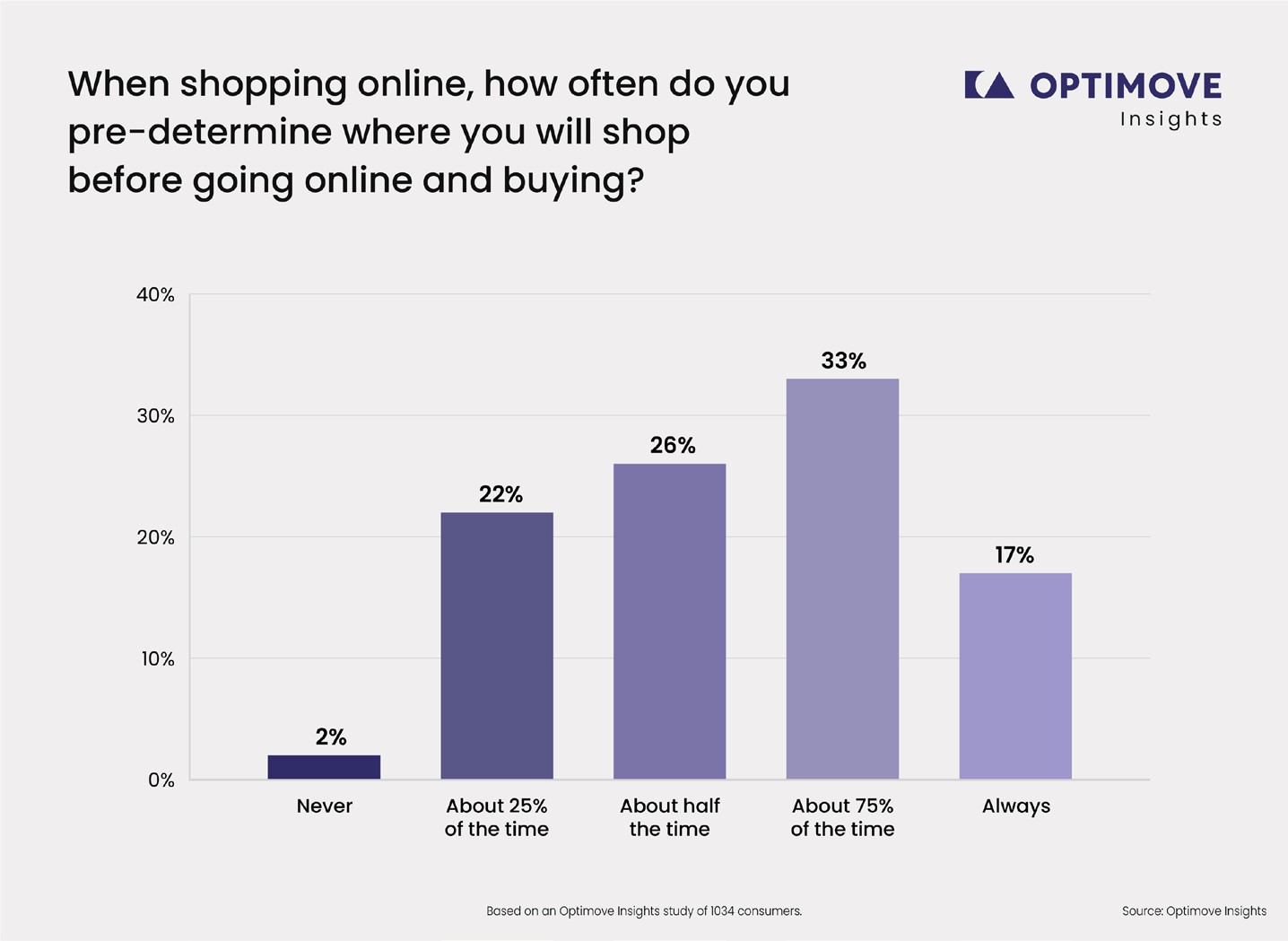
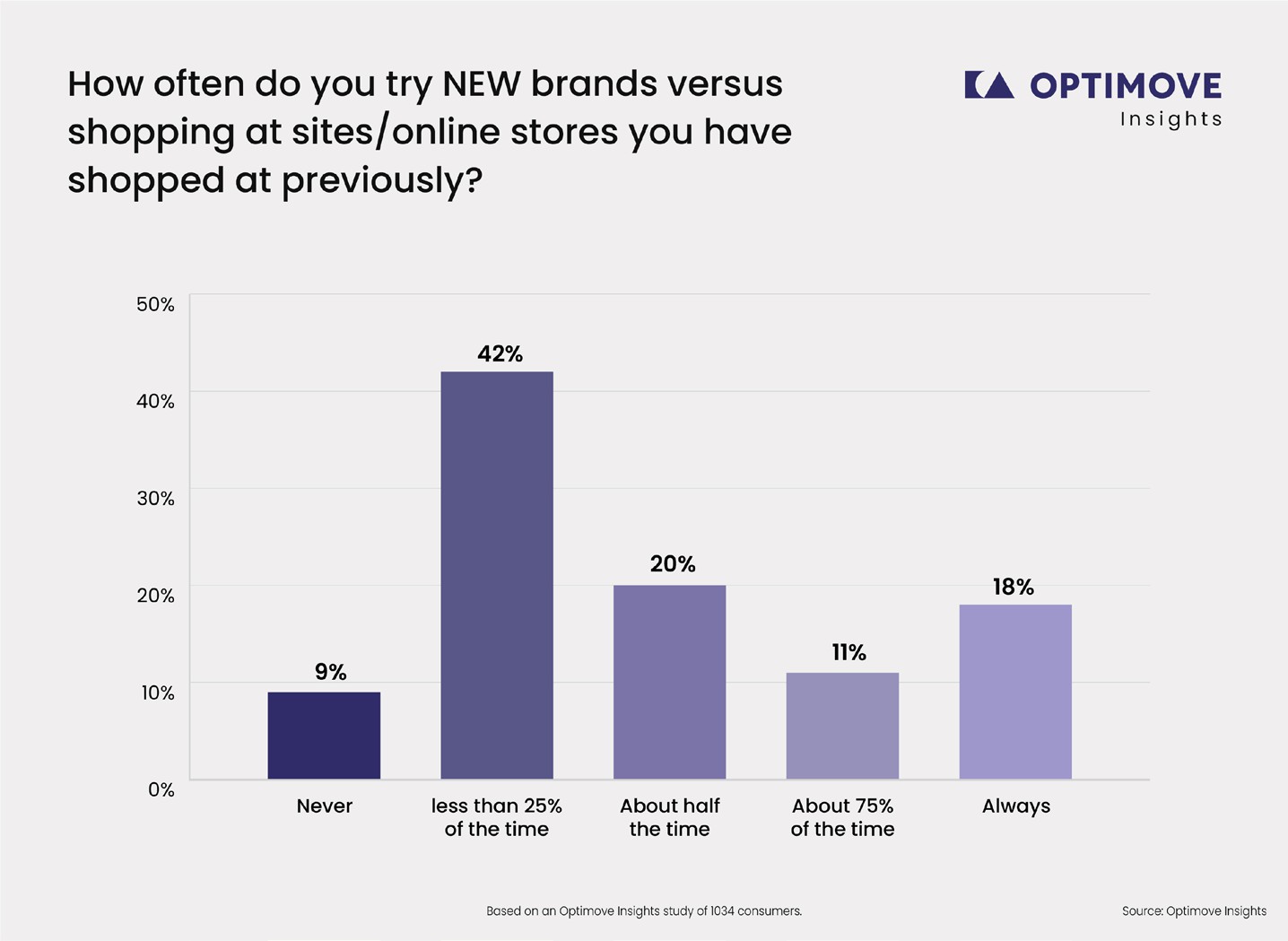
Findings: Most consumers enter shopping journeys with a brand already in mind, with 76% pre-determining where they will shop about half of the time or more. In addition, 51% try new brands about 25% of the time or less, signaling a strong preference for familiar retailers when making purchase decisions.
Interpretation:
The data indicates that loyalty plays a decisive role in where sales ultimately land. When consumers pre-determine where they will shop, competition effectively ends before the browsing session begins.
This behavior also explains why experimentation with new brands remains limited. While consumers may explore alternatives, the majority default to brands they already know and trust. Familiarity reduces perceived risk, simplifies decision-making, and accelerates conversion, making loyalty a powerful revenue driver rather than a soft engagement metric.
Implementation Approach:
To capitalize on loyalty-driven sales, brands must focus on sustained salience and consistency across the customer journey. This includes reinforcing brand value outside transactional moments, maintaining reliable experiences, and delivering communication that keeps the brand top of mind, sending relevant offers and information to the consumer. When loyalty is actively maintained, consumers’ purchasing decisions tend to be more assured.
3 . Discovery Is Frequent, But It Doesn’t Lead to Conversion Automatically
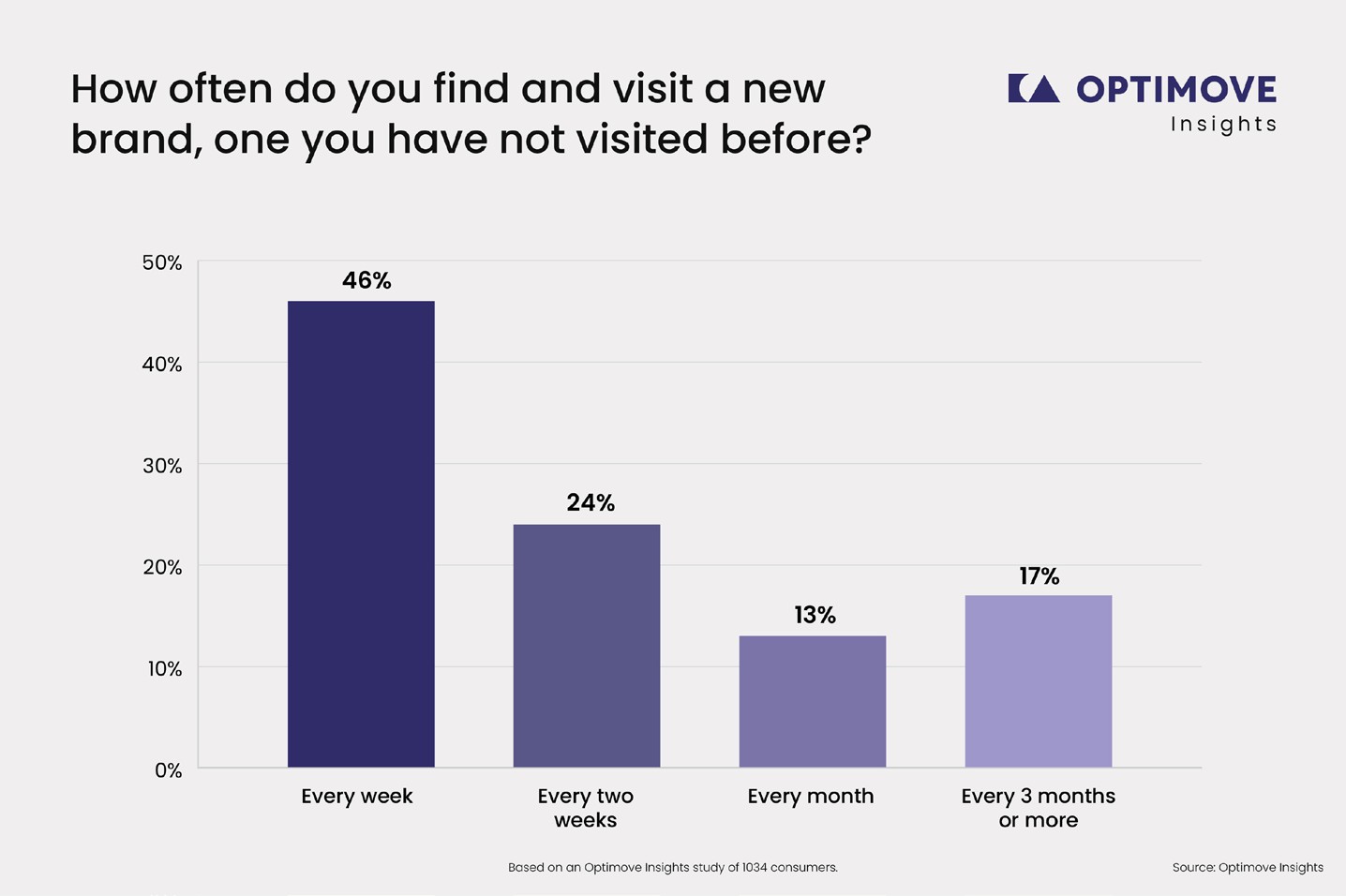
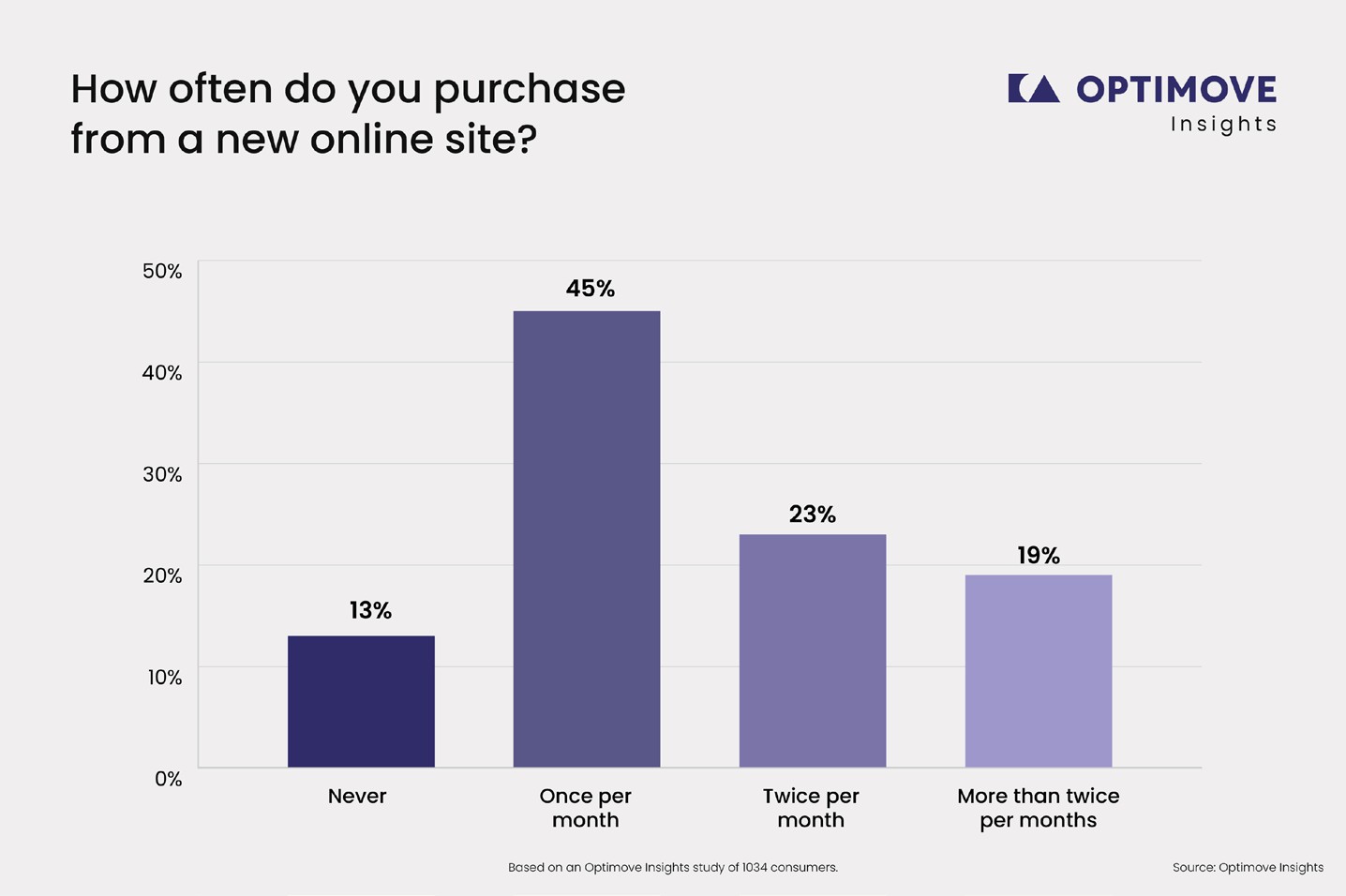
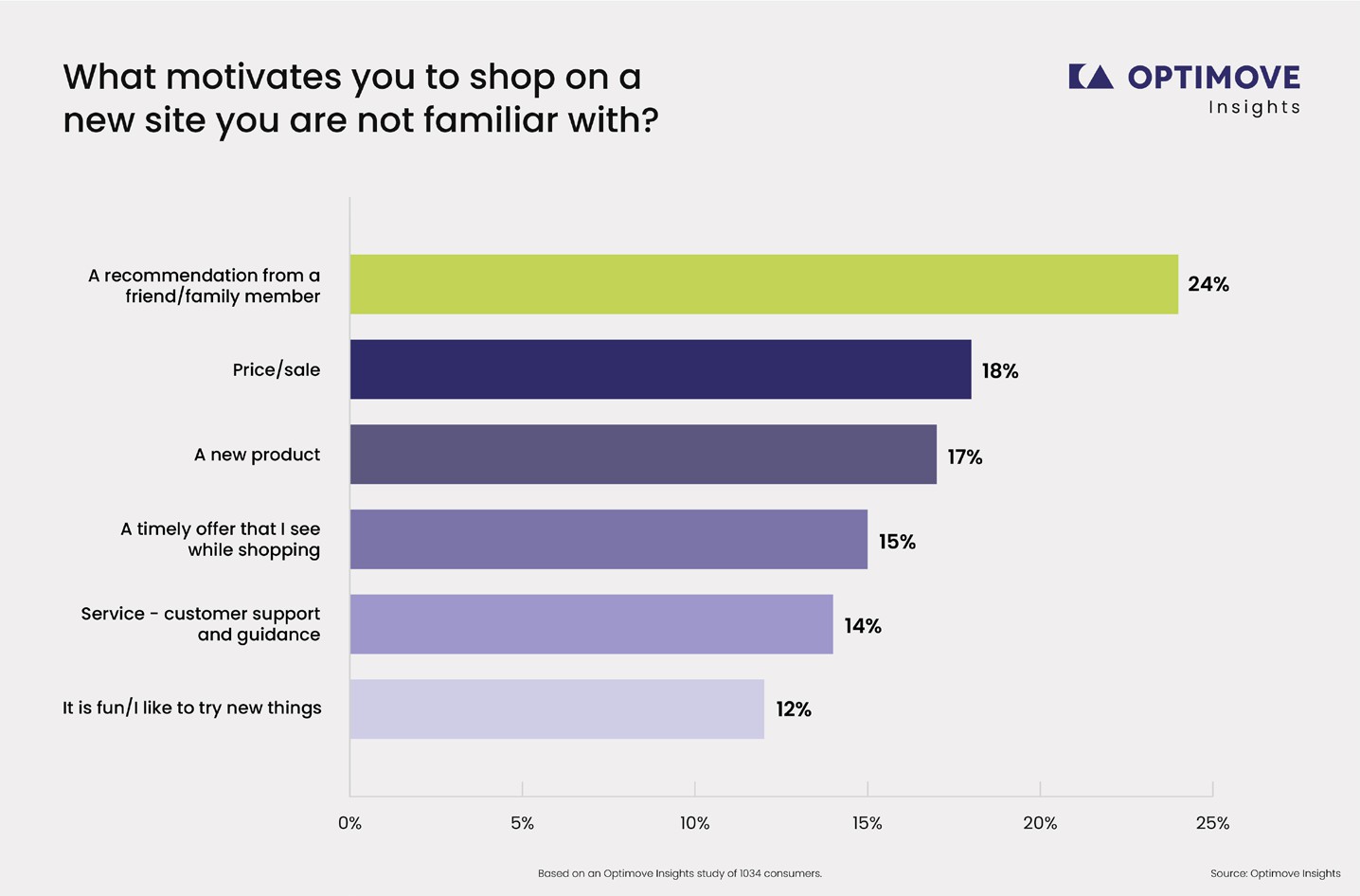
Findings: Consumers actively discover new brands, with 46% visiting a new brand every week, yet purchasing remains infrequent, with 58% buying from a new site only once per month or never. The main factors that lead people to try unfamiliar brands are almost evenly divided between promotions, timely offers, novelty, and good brand support, totaling 64% of responses.
Interpretation:
The gap between discovering new brands and actually buying them highlights a clear conversion barrier: consumers are willing to browse unfamiliar brands, but they commit cautiously and over time, with the right stimulus.
No single factor dominates the decision to try a new brand. The near-even distribution across promotions, timely offers, product novelty, and customer support indicates that conversion depends less on a single trigger and more on the cumulative perception of value, credibility, and reassurance delivered across multiple touchpoints.
That is why behavioral data is so important. Brands can ensure each message will be perfectly aligned with consumers’ interests, orchestrating relevance across every promotional, experiential, or service-driven interaction to contribute to a coherent trust-building journey.
Implementation Approach:
Brands should approach acquisition as a staged trust-building process rather than a one-time conversion event. This requires orchestrating relevant, timely, and consistent communication that reinforces value beyond the first interaction. Consistency and coordination between campaigns can accelerate confidence, shorten the path from discovery to conversion, and transform fragmented interactions into a unified brand experience.
4 . Loyalty Is Not Built With Volume, It Is Built With Relevance
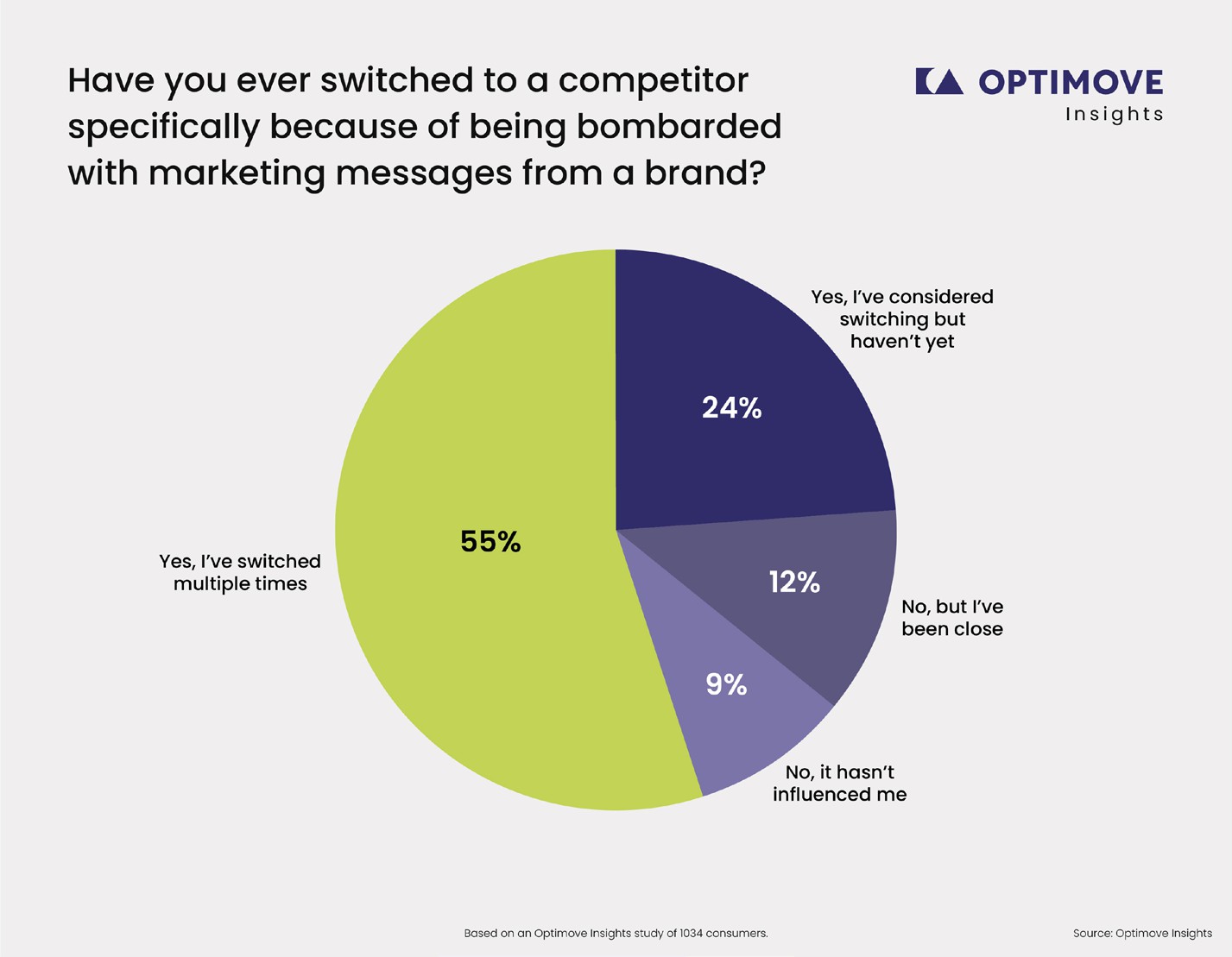
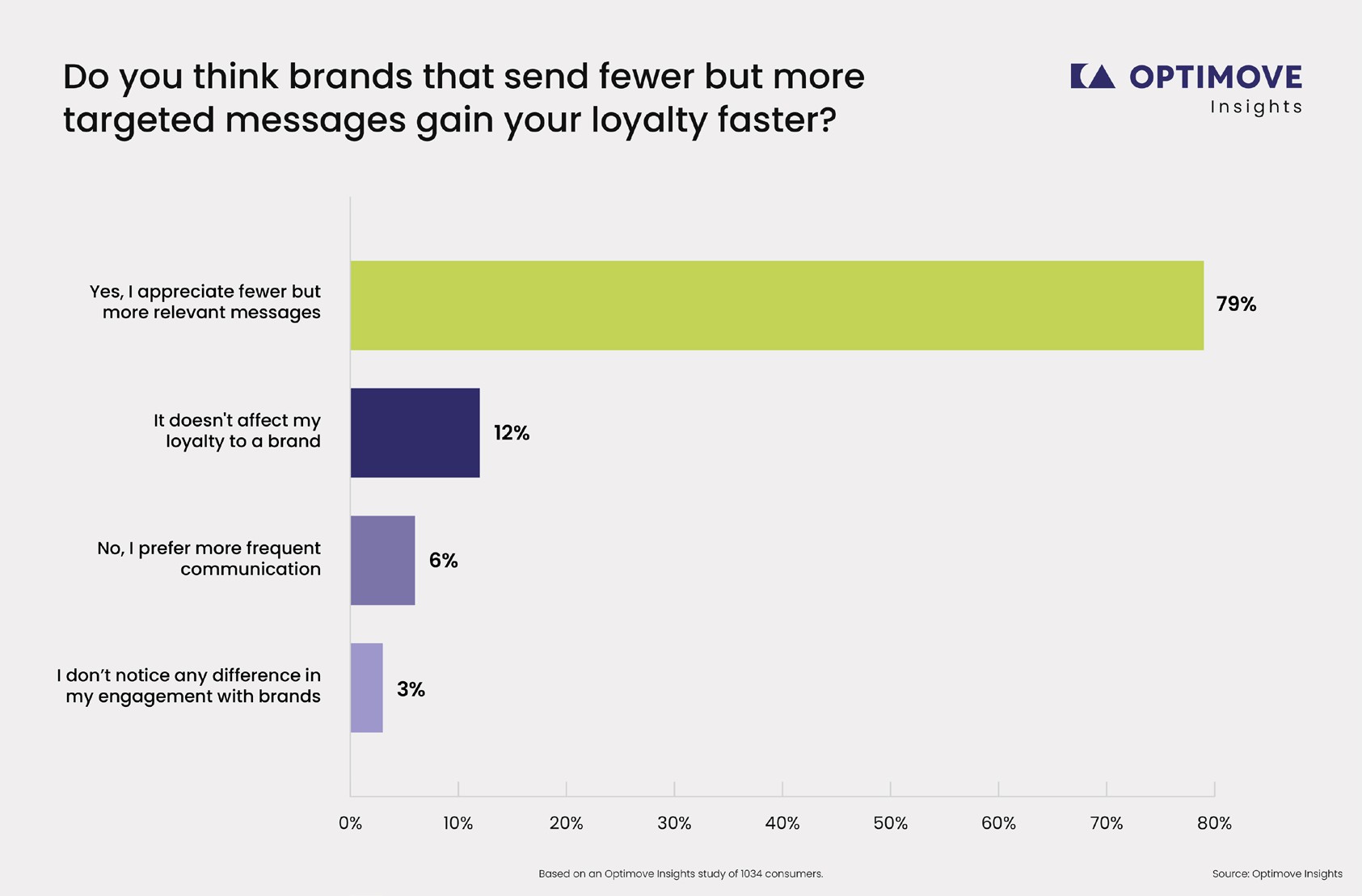
Findings: Message overload has tangible consequences, with 55% of consumers switching brands multiple times due to marketing bombardment, and an additional 24% considering switching. In contrast, 79% say brands that send fewer but more targeted messages gain their loyalty faster.
Interpretation:
Excessive communication is not a neutral inefficiency; it actively erodes brand relationships. When messaging prioritizes volume over relevance, consumers interpret it as disregard for their preferences and attention. Switching behavior in this context becomes a rational response to protect time, focus, and a clear message to brands that insist on this kind of strategy.
The preference for fewer, but more relevant, personalized, and timely messages highlights what loyalty actually responds to. Consumers reward brands that demonstrate restraint, contextual awareness, and relevance. Loyalty accelerates when each interaction consistently proves that the brand understands the consumer’s needs and intent.
Implementation Approach:
Brands must shift from volume-driven outreach to relevance-led orchestration across all touchpoints. This requires unified decision-making that governs when not to communicate as deliberately as when to engage. By applying Positionless Marketing principles to control frequency, context, and personalization centrally, brands can replace noise with meaning and transform communication into a sustained loyalty driver rather than a source of churn.
Conclusion
These insights redefine loyalty as an active and consequential relationship. Consumers are not resistant to engagement, discovery, or personalization; they are resistant to noise, irrelevance, and perceived disregard for their time and preferences. Loyalty forms where brands consistently prove their value and their capacity to understand their customers and build a long-term exchange with them.
The data makes clear that loyalty concentrates demand and drives sales long before a transaction occurs. Brands that earn a place in consumers’ mental shortlist benefit from it, but to assume loyalty will persist without reinforcement risk accelerating disengagement.
Equally important is the path from discovery to conversion. Loyalty requires time, consistency, and accurate communication that reinforces relevance at every touchpoint. Each interaction either shortens or extends the distance between curiosity and commitment.
In this context, Positionless Marketing is not an optimization layer; it is a structural necessity. By removing silos between data, decision-making, and execution, brands can orchestrate relevance across channels, moments, and messages. When communication becomes intentional rather than excessive, loyalty becomes a durable competitive advantage.
About Optimove
Optimove, the creator of Positionless Marketing, frees marketing teams from the limitations of fixed roles, giving every marketer the power to execute any marketing task instantly and independently. Positionless Marketing has been proven to improve campaign efficiency by 88%, allowing marketing teams to create more personalized engagement with existing customers.
For two years running, Optimove has been positioned as a Visionary in Gartner’s Magic Quadrant for Multichannel Marketing Hubs, recognized for its AI-driven decisioning, prescriptive insights, and proven ability to orchestrate thousands of personalized campaigns in real time across channels. AI-led marketing is a hallmark of Optimove’s visionary leadership. By embedding AI directly into its platform as early as 2012, Optimove paved the way for today’s Positionless Marketing standard.
Its Positionless Marketing Platform includes Optimove Engage and Orchestrate for cross-channel campaign decisioning and orchestration; Optimove Personalize, a digital personalization engine; and Optimove Gamify, a loyalty and gamification platform.
Today, its comprehensive AI-powered suite is at the leading edge of empowering marketers to streamline workflows from Insight to Creation and through Optimization. Optimove provides industry-specific and use-case solutions for leading consumer brands globally.
About Optimove Insights
Optimove Insights is the analytical and research arm of Optimove, dedicated to providing valuable industry insights and data-driven research to empower B2C businesses.