A decade ago, many CMOs focused on telling the brand story.
Today, leaders like Jennifer Marino, CMO of specialty insurer MSIG USA, also shape strategy, manage reputation and steer the customer experience alongside sales and product teams.
In specialty commercial insurance—coverage for complex or high risk businesses, such as construction firms, healthcare systems, manufacturers and cyber risks—that responsibility raises the stakes. Marino and her team are tasked with turning highly technical coverages and evolving global risks into clear narratives that resonate with brokers and risk managers. They also must signal where the enterprise can find its next wave of growth. To do that, according to Marino, they ground every campaign in market insight, choose channels that actually reach a niche audience and prove that brand work drives measurable business value over time.
In this conversation, Marino breaks down how she thinks about the CMO job, starting with insight, then earning influence and proving impact. We then discuss how that shows up in MSIG USA’s “Wherever Risk Happens” campaign, from the research to the in‑market execution.
Q: Insurance is built on complex, technical products. How do you turn that complexity into clear, effective marketing that supports growth? 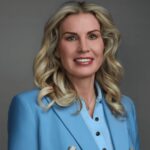
Commercial insurance is inherently technical, but that technical product doesn’t have to create complexity when we’re marketing. Our starting point is always around insight. Before developing any marketing campaign or strategy, we always analyze the feedback from brokers, clients and customers.
We also use search data, search behavior, engagement with our brand and competitive positioning to better understand where confusion exists today, where needs lie and where we have an opportunity to differentiate.
For instance, our current campaign, “Wherever Risk Happens”, actually came from all of those insights. Rather than leading with just product features, we focused on the growing interconnectedness in commercial insurance globally today, as well as the evolving risks in today’s market. We also focused on how MSIG USA can combine our global capabilities, our underwriting expertise to understand those evolving risks and our disciplined claims service to help clients.
Q: Can you walk me through how broker and customer insight shaped the “Wherever Risk Happens” campaign, from the core idea to the channels you decided to invest in?
We found that brokers and risk managers, our clients, really know what products they’re looking for — cyber coverage, directors’ and officers’ coverage, property coverage for different locations. They don’t necessarily need us to walk them through our coverages; they can find that on our website and in conversations with our distribution team and underwriters.
What they need to know is, why should I consider MSIG USA? What do you do differently? What we found through this insight around ‘Wherever Risk Happens’ is that large organizations that need these coverages want to know that as they grow their business, we can grow with them.
Q: The creative is one piece, but distribution is just as important. How do you make sure you are reaching the right audience with your campaigns, and how do you decide where to invest?
So many times I see companies put out messages where they usually advertise, without thinking about their prospects. Where are they spending time? Is that sponsorship actually relevant to your audience?
We are very specific about micro-targeting and understanding where brokers and risk managers already spend their time. Some examples are industry publications, both digital and, believe it or not, still in print. We actually did primary research to understand whether they were looking at those print publications, because so many of them are dying, but in commercial insurance they’re still spending time with print. So it’s really important that we have a presence there, even if it’s not a vehicle that’s applicable to other types of companies.
Digitally, we take the message we know resonates in print and use it in earned media, PR and social media, where we know they’re spending time. What we didn’t do is spend any money on TV. That audience is so broad that it doesn’t make sense for us to spend those dollars, because our target is so micro in terms of commercial insurance buyers.
Q: Insurance is a relationship-driven business built on trust. How do you measure whether your marketing is actually building trust and long-term brand health?
We look at trust and long-term brand health, and there isn’t one KPI that gives you that answer. We use a balanced scorecard that combines market perception, engagement and commercial outcomes — how the business is doing overall.
On the perception side, we look at awareness and familiarity, our share of voice, executive positioning and visibility, and website engagement. Taken together, those tell us whether people are engaging with us and whether the message is resonating. We also look at ad studies on how our ads are performing in market, and we gather feedback from brokers through advisory conversations, customer feedback and ongoing CRM feedback to see what conversations are occurring. That helps us make sure we’re still differentiated, still relevant and still delivering everything we’re promising.
Then we connect those insights and that data to business outcomes. We look for stronger engagement from our target brokers, more interest in areas of our underwriting expertise, products performing against their goals, growth in high-quality submissions aligned with our appetite, and stronger recruiting outcomes for new employees. If those are meeting the mark and hitting budget goals, we know our brand is contributing to overall enterprise value.
Overall, if I had to pick one indicator of improving brand health, it’s whether we’re earning a place on a broker shortlist before a submission is even sent. That’s where trust becomes a competitive advantage and ultimately creates enterprise value.
Q: From what you’re seeing in the data, what kinds of ads perform best for MSIG USA and for insurance marketers more broadly?
What we’re seeing really resonates with brokers and risk managers starts with being able to talk about, and confirm, that you have the financial strength as a company to be there for the long term. One of the things risk managers and brokers worry about, particularly as the market continues to evolve, is companies coming in and out of different products and markets. They enter, find out they can’t be profitable and pull out. For so many of these products, because it’s a long-term risk, they can’t afford to have a partner that’s not committed to the market or product long term and doesn’t have the financial strength to stay in it and remain profitable.
The other thing we find really important is ads that talk about understanding evolving risk and demonstrate that you have that expertise — that you understand how something like cyber can evolve over the next 10 years and can underwrite it in a way that makes sense. The ads that tend to test best are the ones that speak directly to what a risk manager and a broker are most concerned about in terms of the relationship and the trust we’ve talked about, and speak to that in a way that resonates with them.
When you get into very specific product attributes or just listing your products, it doesn’t tend to test well, because it becomes a commoditized product at that point.